Every time you sit down to eat, you have an opportunity to follow the Sunnah of our beloved Prophet Muhammad ﷺ — and earn reward while nourishing your body at the same time.
The prophetic foods and their benefits are not just historical facts — they are a living, practical guide to the healthiest diet on earth.
Science is only now beginning to understand what Allah revealed to the Prophet ﷺ over 1,400 years ago.
In this guide we cover 7 of the most powerful prophetic foods and their benefits — with Hadiths references, modern scientific backing, and easy ways to add each one to your daily life.
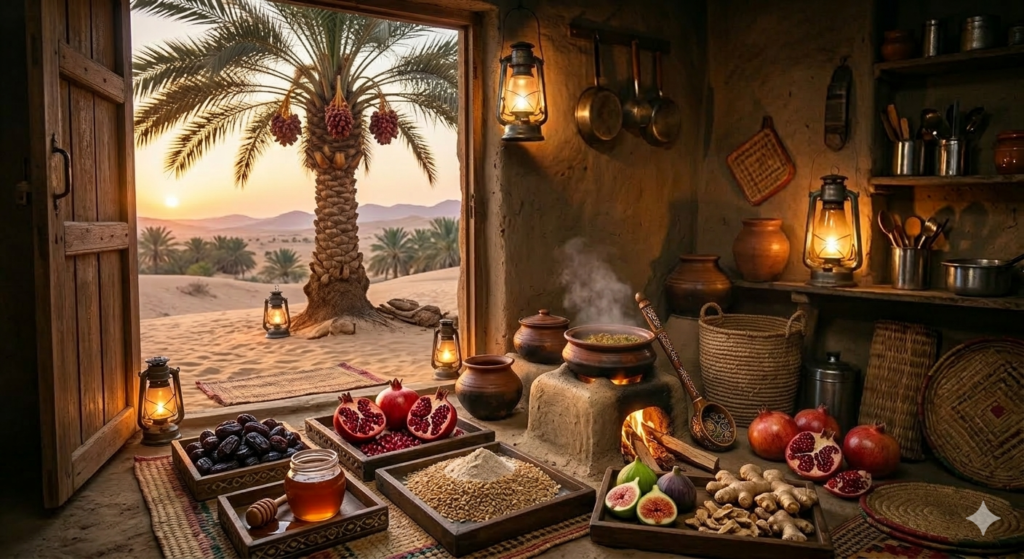
1. Dates (Tamr) — The Food of the Prophet ﷺ
If there is one food most associated with the Prophet Muhammad ﷺ, it is dates. He ﷺ ate them daily, broke his fast with them during Ramadan, and spoke of their benefits extensively in authentic narrations.
Narrated Sa`d: Allah’s Messenger (ﷺ) said, “He who eats seven ‘Ajwa dates every morning, will not be affected by poison or magic on the day he eats them.”
Dates are one of nature’s most complete foods — rich in fiber, iron, calcium, potassium, magnesium, and Vitamin B6. They provide instant energy, stabilise blood sugar after fasting, support bone health, and strengthen the heart.
Ajwa dates — the specific variety mentioned in Hadith — grow in Madinah and are considered the most blessed. Regular dates carry the same nutrients and are perfectly fine for daily use.
2. Honey (Asal) — The Quran’s Own Medicine
Honey is one of only two foods mentioned directly in the Quran as a healing substance. Allah SWT dedicates two verses in Surah An-Nahl (The Bee) to describing honey as a cure that comes from the creation He designed.
“There emerges from their bellies a drink varying in colours, in which there is healing for people.” — Quran, Surah An-Nahl 16:69
It was narrated from ‘Abdullah that the Messenger of Allah (ﷺ) said: “You should take the two that bring healing: Honey and the Qur’an.”
Raw, unprocessed honey contains over 200 bioactive compounds including antibacterials, antifungals, antioxidants, enzymes, and natural prebiotics. It heals wounds, soothes sore throats, improves gut health, boosts immunity, and is one of the few natural foods with proven antimicrobial properties.
The Prophet ﷺ would drink a glass of water mixed with honey every single morning — a practice that modern nutritionists now recommend for gut health and morning energy.
Recommended: Raw Sidr honey — one of the most prized honeys in the Islamic world, Raw unfiltered honey [Buy now]
3. Olive Oil — From a Blessed Tree
Olive oil is mentioned in the Quran and praised in multiple Hadiths. The Prophet ﷺ both consumed it and applied it to his body — making it one of the most versatile Sunnah foods.
Narrated Abu Asid: “The Prophet (ﷺ) said: Eat of its oil and use it (the olives), for indeed it is from a blessed tree.”
Extra virgin olive oil is scientifically recognised as one of the most heart-protective foods on earth. It is the foundation of the Mediterranean diet — the single most studied healthy diet in the world — and its benefits are now backed by thousands of research studies.
- Reduces LDL (bad) cholesterol and raises HDL (good) cholesterol
- Powerful anti-inflammatory — reduces risk of chronic disease
- Delays signs of ageing when applied to skin
- Protects against heart disease, Type 2 diabetes, and certain cancers
- Supports brain health and reduces risk of cognitive decline
Recommended: Cold-pressed extra virgin olive oil [Buy Now] — use in cooking and apply a few drops on skin as Sunnah practice.
4. Black Seed (Habbatus Sauda) — Cure for Every Disease
No list of prophetic foods and their benefits would be complete without black seed — the most praised medicinal food in all of hadith literature. We have covered this in full detail in our dedicated article.
Narrated Abu Huraira: I heard Allah’s Messenger (ﷺ) saying, “There is healing in black cumin for all diseases except death.”
Sahih al-Bukhari 5688
Nigella sativa (kalonji) contains Thymoquinone — one of the most powerful natural anti-inflammatory and antioxidant compounds known to science. It supports immunity, skin health, respiratory function, gut health, and has been studied for over 129 different health conditions.
Read our full guide: Black seed oil benefits in Islam
Shop: Pure cold-pressed black seed oil [Buy Now].
5. Barley (Sha’ir):
Barley is one of the most frequently mentioned grains in hadith. The Prophet ﷺ ate it regularly in the form of bread, porridge, and soup — and recommended it specifically for illness recovery.
“The Messenger of Allah ﷺ said to Ali: O Ali, eat some of this barley soup, for it is better for you.” — Ibn Majah 3442
Barley is now recognised as one of the world’s healthiest grains. It contains more dietary fibre than almost any other grain, including a special fibre called beta-glucan that is clinically proven to reduce cholesterol, regulate blood sugar, and feed beneficial gut bacteria.
- Highest fibre content of any common grain
- Beta-glucan reduces cholesterol and stabilises blood sugar
- Supports weight management — keeps you full for hours
- Excellent for fever recovery
- Easy to add to soups, porridge, bread, and stews
Recommended: Organic barley powder or flour [Shop Now] — add to smoothies, soups, or bake into bread.
6. Figs (Teen) — A Fruit Allah Swears By
Allah swears by the fig in the opening verse of Surah At-Teen — making it one of only a handful of foods mentioned directly in the Quran. The Prophet ﷺ also described figs as a fruit of paradise.
“By the fig and the olive.” — Quran, Surah At-Teen 95:1
Figs are extraordinarily dense in nutrients — they contain more calcium than milk per gram, more iron than red meat, and more antioxidants than most berries. They are particularly beneficial for bone health, digestive health, and blood pressure regulation.
- Highest calcium content of any fruit — strengthens bones and teeth
- Rich in fibre — relieves constipation and supports gut health
- Natural potassium — lowers blood pressure
- Anti-cancer antioxidants — particularly for colon and breast health
7. Pomegranate (Rumman) — A Fruit of Jannah
Pomegranate is mentioned three times in the Quran — twice describing it as one of the blessed fruits of Paradise, and once in the context of the fruits of the earth. The Prophet ﷺ is reported to have said that there is not a single pomegranate that does not have a seed from Jannah inside it.
Modern science has confirmed that pomegranate is among the most antioxidant-rich foods ever studied — containing three times more antioxidants than green tea. It actively reduces inflammation, protects heart health, fights cancer cells, supports memory, and strengthens the immune system.
- Three times more antioxidants than green tea
- Reduces arterial plaque — dramatically improves heart health
- Fights prostate and breast cancer cells in multiple studies
- Improves memory and protects against Alzheimer’s disease
- Powerful anti-inflammatory — reduces joint pain and arthritis
How to Add Prophetic Foods to Your Daily Routine
You do not need to change your entire diet to start benefiting from prophetic foods and their benefits. Here is a simple Sunnah daily routine:
- Morning (empty stomach): Half teaspoon black seed oil + glass of warm water and honey
- Breakfast: Barley porridge with dates and a drizzle of raw honey
- Lunch/dinner: Cook with extra virgin olive oil instead of vegetable oil
- Snack: 3–7 dates in the afternoon — as the Prophet ﷺ regularly ate them. If you are diabetic consult your doctor first
- Seasonal: Add figs and pomegranate to your diet whenever available
Frequently Asked Questions:
What are the most important prophetic foods mentioned in the Quran?
The Quran specifically mentions dates, figs, olives, pomegranates, grapes, honey, milk, and ginger (in the context of Jannah). Each of these is mentioned in a context of blessing, nourishment, or healing — making them the most spiritually and nutritionally significant foods in Islamic teaching.
Is following the prophetic diet a form of worship?
Yes. Eating the foods the Prophet ﷺ ate and following his eating practices — saying Bismillah, eating with the right hand, not overfilling the stomach, and choosing wholesome halal food — are all Sunnah acts that carry reward. Every meal becomes an act of worship when you follow the prophetic way.
Which prophetic food is best for immunity?
Black seed oil is the single most powerful prophetic food for immunity — described in authentic Hadith as a cure for every disease. Honey is the second most important, with clinically proven antibacterial and immune-boosting properties mentioned directly in the Quran.
Can I buy all prophetic foods in Pakistan?
Yes — dates, honey, olive oil, black seed (kalonji), barley, figs, and pomegranates are all widely available in Pakistan at local markets, and online. For highest quality versions — especially Ajwa dates and Sidr honey — we recommend buying from trusted online sources.
How do prophetic foods and their benefits compare to modern superfoods?
The prophetic foods and their benefits far exceed what modern nutrition labels most popular superfoods. Dates contain more iron than spinach, black seed outperforms most pharmaceutical anti-inflammatories in studies, honey has stronger antibacterial properties than many antibiotics, and pomegranate has more antioxidants than any commonly sold superfood supplement. SubhanAllah.
Final Thoughts — Eat the Sunnah, Live the Sunnah
The prophetic foods and their benefits are one of the greatest gifts Allah SWT has given this Ummah. Every food on this list was specifically highlighted in the Quran or authentic Hadith — and every single one has been confirmed by modern science to be among the healthiest foods on earth.
This is not a coincidence. This is a miracle.
Start with one prophetic food today. Add honey to your morning water. Eat seven dates. Cook with olive oil. Take your black seed oil. Every small step you take toward the prophetic diet is both a healthy investment and an act of worship — and that is a combination no modern diet can compete with.
May Allah grant you and your family health, barakah, and the tawfiq to follow the Sunnah in every aspect of your life. Ameen.